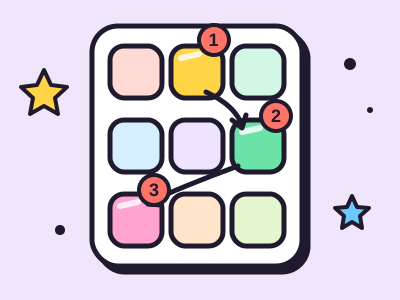
How To Play the Haggling Game
You run a small stall full of odd second-hand stuff: a lamp shaped like a disappointed goose, a ukulele with three strings, a snow globe with no snow. Ten customers will visit, one at a time, and each one wants a single item.
Every item has a sticker price, which is a rough guide to what it is worth. The customer starts with an offer, usually lower than that. Then it is your move:
- Accept their offer and the sale is done.
- Counter by typing your own price, or use the minus and plus buttons, then press Counter. On a keyboard, type the number and press Enter.
Here is the secret. Every customer has a hidden top price they are willing to pay. Ask for that much or less and they buy at your price. Ask for more and they lose a patience dot, then maybe raise their offer a bit. Run out of patience and they walk away with nothing.
After each customer, you see what you sold for and what their secret top price really was. After all ten, your stall closes and you see your total.
What Your Score Means
Your score is the total money you earned from all ten customers. Your best day is saved as your personal best.
The result screen also shows what share of every customer’s secret top price you managed to collect. That number is the best way to judge how well you haggled, since some runs have richer customers than others.
- 90% or more: you read every customer like a book.
- 70% to 89%: strong trading. A few buyers got a small bargain.
- 45% to 69%: you played it safe, or a couple of customers stormed off.
- Under 45%: a lot of junk left with too little cash, or nobody left with it at all.
Tips To Improve
- Read the label under each customer. A big spender can go well past the sticker price. A penny pincher almost never will.
- Use the sticker price as a starting point. Try countering a little above it, then come down if they get grumpy.
- Watch the patience dots. When only one dot is left, your next counter is your last chance. Asking for their current offer plus a little is safer.
- Don’t believe the bluffers. When a sneaky bluffer says “final offer”, it often is not. They may even pretend to leave once.
- Hurried customers want speed. They only have a couple of dots, so make your first counter count.
Why Haggling Is Fun
Haggling is a little game of guessing what the other person is thinking. You want a high price, they want a low one, and somewhere in the middle there is a number that makes you both happy enough. Every counter gives away a clue about how badly you want to sell.
In this game every customer is made up, every item is ridiculous, and nobody gets hurt if you overcharge for a haunted rubber duck. It is a safe place to practice being brave about asking for more.